A Place to Belong - Holy Angels Featured in Pi Kappa Phi Magazine
/Editor's Note: The following story originally appeared in the Spring 2026 issue of Star & Lamp magazine, published by The Ability Experience. We encourage you to view it in its original format here.
by Rachel Greene
On any given Saturday morning, in the small community of Belmont, North Carolina, Chris shows up for work. He ties on his apron, takes his place behind the counter at Spruced Goose Station and gets ready to take orders. He knows the regulars, and they know him. He greets each with a smile and is happy to serve a good meal with a side of conversation.
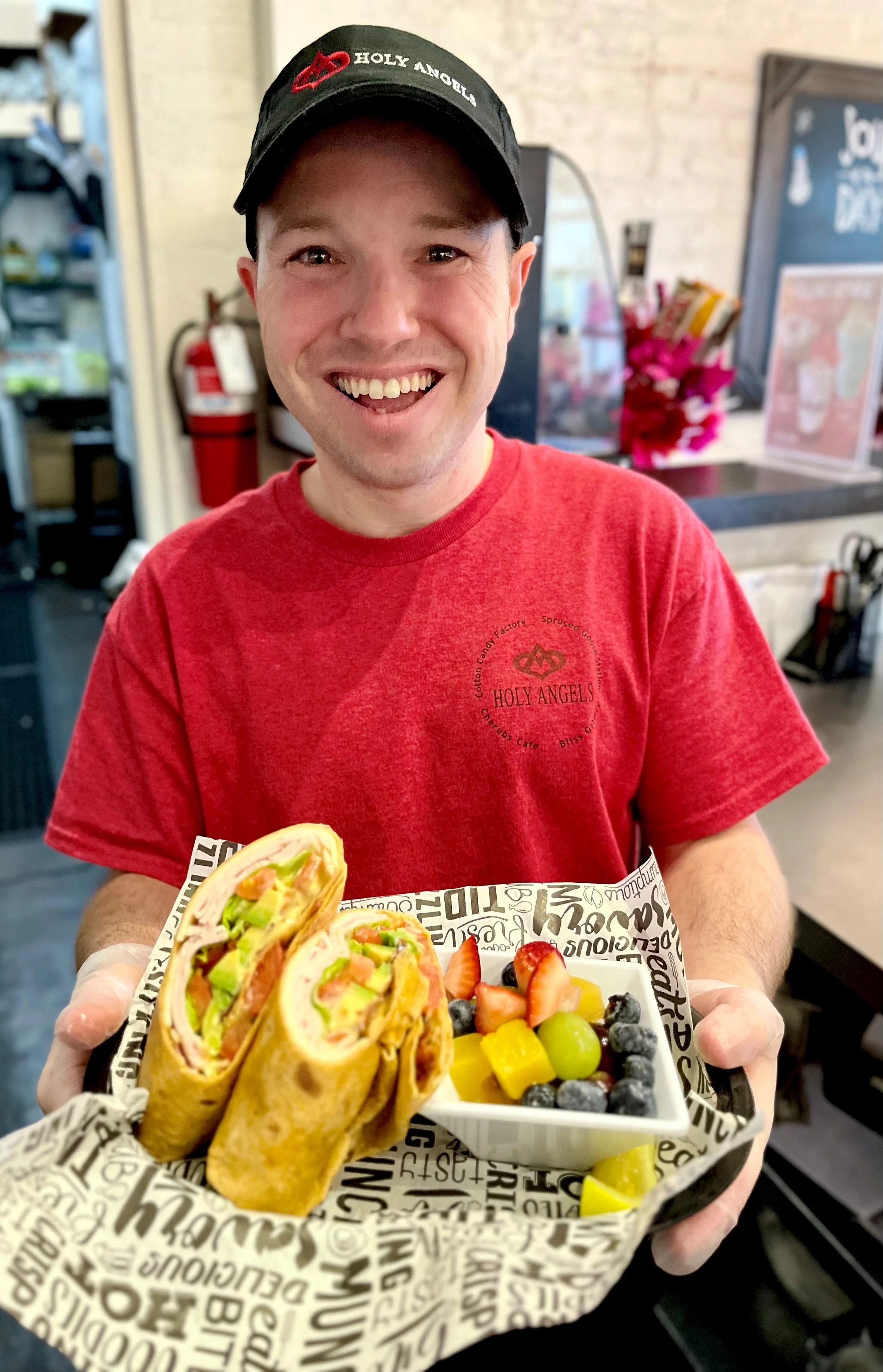
Chris at work at spruced goose station.
Later in the week, he might find himself making candy bouquets to sell, building his newest Lego set or spending time on the Catawba River. His days are filled with work, hobbies, friendships and routine, and his life is as full as anyone else's.
Chris has a disability. That is part of his story, but it is hardly the entire story.
For 70 years, that is what Holy Angels has been showing the Belmont community, and the world beyond it.
Located on the Sisters of Mercy campus, Holy Angels serves children and adults with intellectual and developmental disabilities and complex medical needs. It is a place where residents receive around-the-clock care and support, but it is also a place where they are given opportunities to learn, work, grow and build lives filled with dignity, purpose and connection.
It began not with business plans or a mission statement, but with a young mother in crisis. She arrived at the doorstep of the Sisters of Mercy carrying her infant daughter, Maria Morrow. Maria had been born with spina bifida and hydrocephalus, and doctors had given her only months to live. Without hesitation, the sisters took her in.
Maria lived far beyond that prognosis, and the life she was given became the beginning of something much larger than any one person. What the Sisters of Mercy offered her was care in a moment of need, but it became the foundation for a community built on the belief that people with disabilities deserve dignity, opportunity and a true sense of belonging.
When she passed away in 2010 at age 54, she left behind the legacy of a community that had grown around the belief that her life mattered.
Today, that legacy can be seen all across Holy Angels.
It can be seen at Camp Hope, the organization's 15-acre recreational facility on the Catawba River, where residents enjoy the outdoors together. It can be seen in Life Choices, Holy Angels' day program, where participants build skills, develop confidence and take part in activities that support greater independence and connection. And it can be seen in downtown Belmont and nearby McAdenville, where residents head to work, greet customers and become part of the fabric of the community.
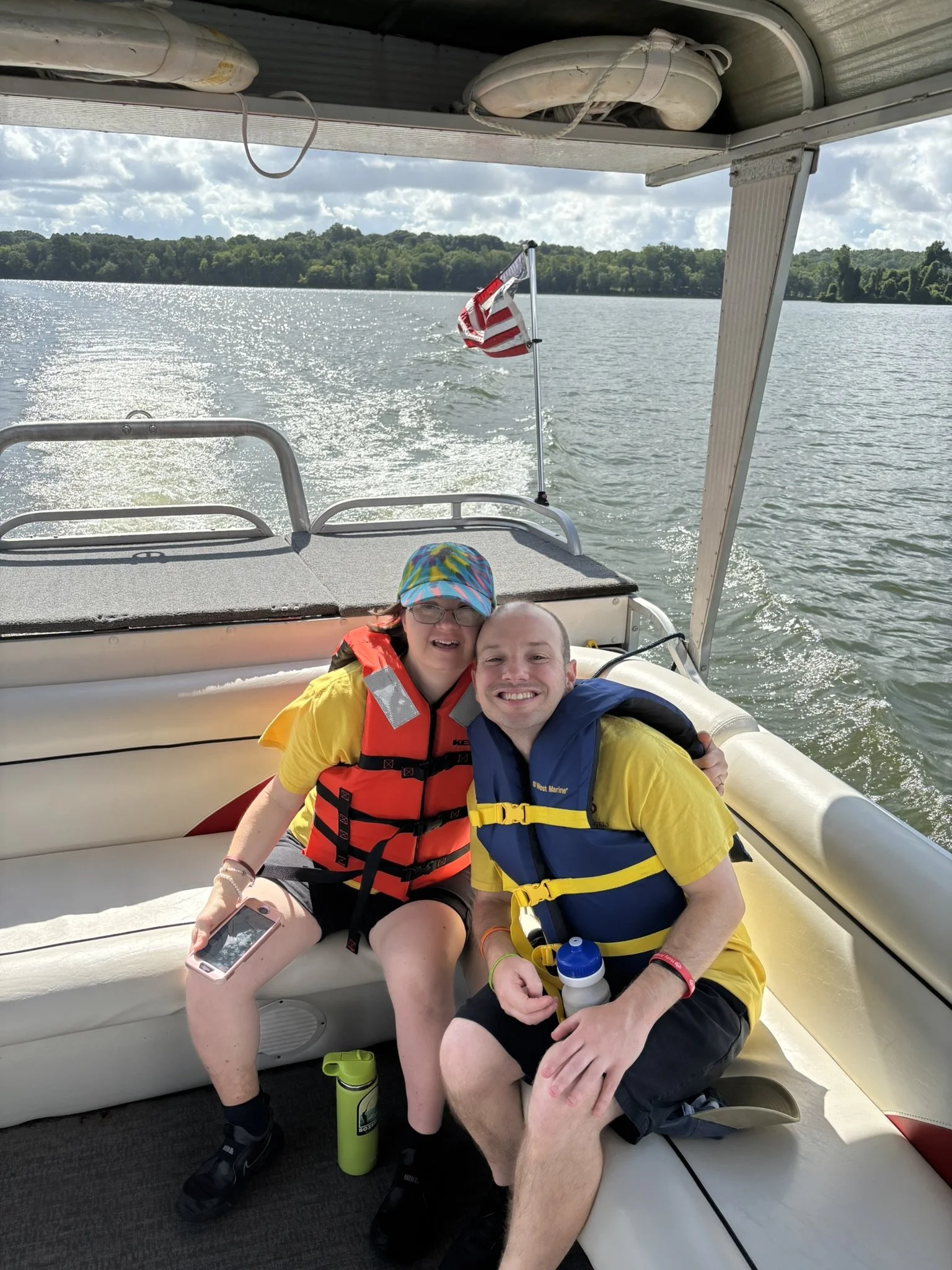
chris and katie enjoy a boat ride on “the spirit of Maria”.
The pontoon boat at Camp Hope is named for the woman who started it all. Decades after Maria arrived with nowhere else to turn, residents like Chris now board the “Spirit of Maria,” laughing with friends and enjoying a life shaped not by limitation, but by possibility.
Holy Angels is now home to 83 residents with intellectual and developmental disabilities and complex medical needs. Thirty-nine residents and community members also participate in Life Choices.
Still, to describe Holy Angels only by numbers would not tell the full story.
Without stepping onto the Holy Angels campus or into one of its businesses, it would be easy to imagine Holy Angels as a medical facility or a care center. It's so much more. It is a home, a workplace, a classroom, a gathering space and, above all, a community.
That is especially visible in the businesses where Holy Angels residents work as crew members. At Cherubs Cafe, Market on Main, the Cotton Candy Factory and Spruced Goose Station, crew members greet customers, serve food, create art and earn their own money. Rather than being set apart from the community around them, they are an integral part of it.
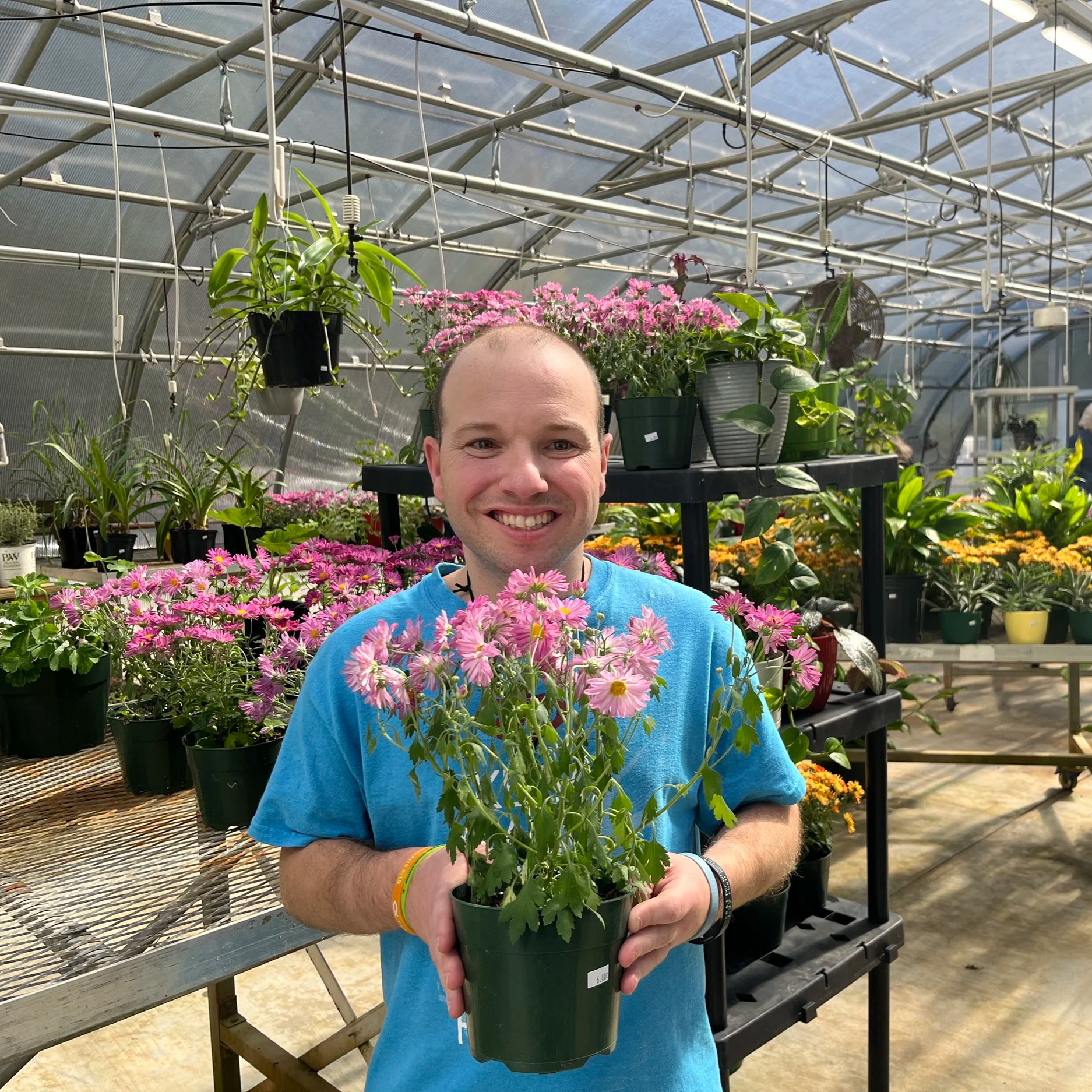
chris shows a plant he helped to grow in horticulture therapy.
The opportunities available to Holy Angels residents begin long before a shift starts. Residents can learn horticulture, develop artistic skills and create products sold in Holy Angels' shops, earning commission, saving up for outings and experiencing the pride that comes from paying their own way. That independence is a central part of Holy Angels' philosophy.
For Chris, those opportunities are part of his daily life. He enjoys his work at Spruced Goose Station, takes pride in making candy bouquets and looks forward to summer days at Camp Hope. He returns home to the space he shares with his roommates with the satisfaction of a hard day's work.
In Belmont, many of those crew members have become local celebrities. Customers know them by name, ask about them when they are not there and return for more than coffee, lunch or gifts. They come back because they have formed real relationships with the people behind the counter.
Laurie Lewis, director of community outreach, has seen that happen up close. A former schoolteacher who now supports residents in their vocational roles, she has watched Holy Angels crew members challenge assumptions simply by showing up, doing their jobs and letting people get to know them.
"There are so many jobs they can do, but people with disabilities are often underestimated by society," Lewis said.
She has also seen what happens when that underestimation begins to fall away.
"Members of the community love the businesses, but they really come for the employees," Lewis said. "They know them, love them and want to see them."
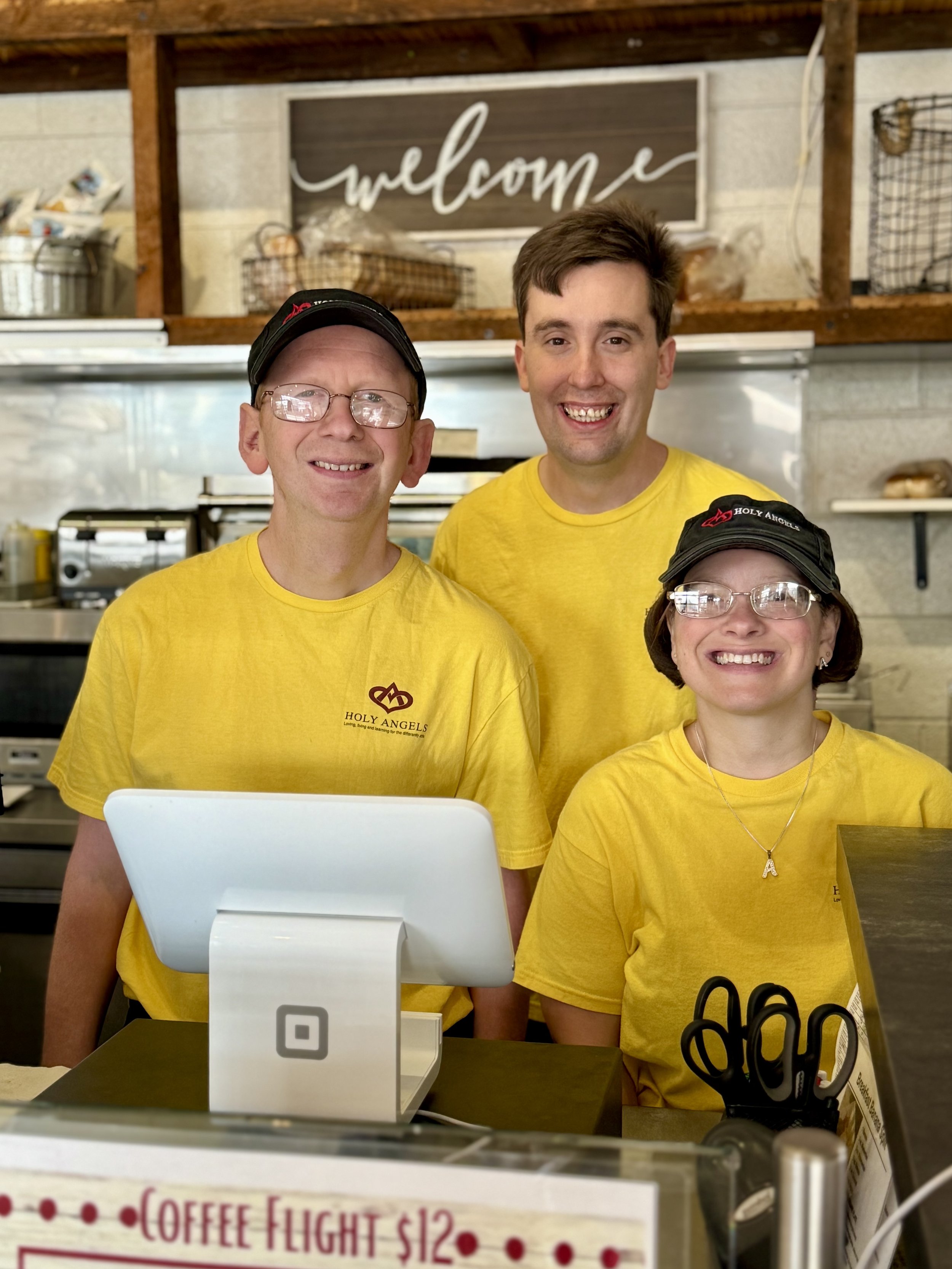
holy angels crew members smile at the register at spruced goose station.
For many customers, a conversation at the counter is their first real interaction with someone who has a disability. Lewis has watched those interactions shift expectations and transform pity or discomfort into real human connection.
"They come into a business expecting one thing and leave having experienced something else entirely," she said. "People just don't know what they're missing until they experience it themselves."
Lewis came to Holy Angels looking for work and instead found purpose.
"My role here is like teaching, but on a whole different level," she said. "I fell in love with Holy Angels the moment I walked through those doors. It didn't take long to realize this was much more than a job."
That same sense of purpose has shaped Holy Angels' long-standing relationship with Pi Kappa Phi and The Ability Experience.
The partnership took root in 1989, when PUSH Executive Director Ken Kaiser saw in Holy Angels an opportunity for Pi Kappa Phi brothers to do more than complete a service project. His vision was to bring student members together to build what was needed, repair what had worn down and form real relationships with the people they served. What began with that early effort at Holy Angels grew into a partnership that has endured for decades.
There is also something fitting about where that relationship grew. Holy Angels was founded in North Carolina, much like The Ability Experience, making the partnership feel all the more natural. Both grew from a belief that people with disabilities deserve dignity, opportunity and lives fully woven into the communities around them.
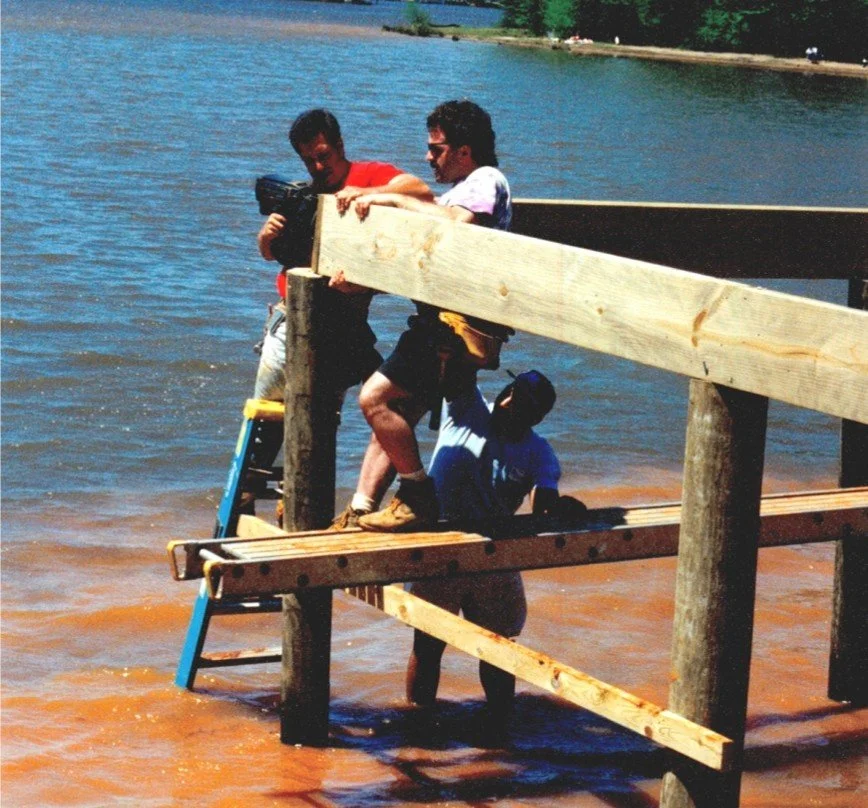
pi kappa phi brothers help to construct the dock at camp hope on the catawba river in 1994.
Over the years, that bond was strengthened by Regina Moody, Holy Angels' longtime president and chief executive officer, who spent 40 years guiding the organization's growth. Moody also served on The Ability Experience board of directors for 18 years, giving her a unique role in deepening the relationship between the two organizations and helping ensure it remained aligned in both service and mission.
For decades, the two organizations have shared an understanding that belonging does not just happen. It must be intentionally built and maintained. At Camp Hope, that shared commitment can be seen clearly. Along the South Fork of the Catawba River, the camp gives residents a place to enjoy the outdoors together, to gather with friends, to laugh around a campfire and to spend time on the water in a setting built with them in mind.
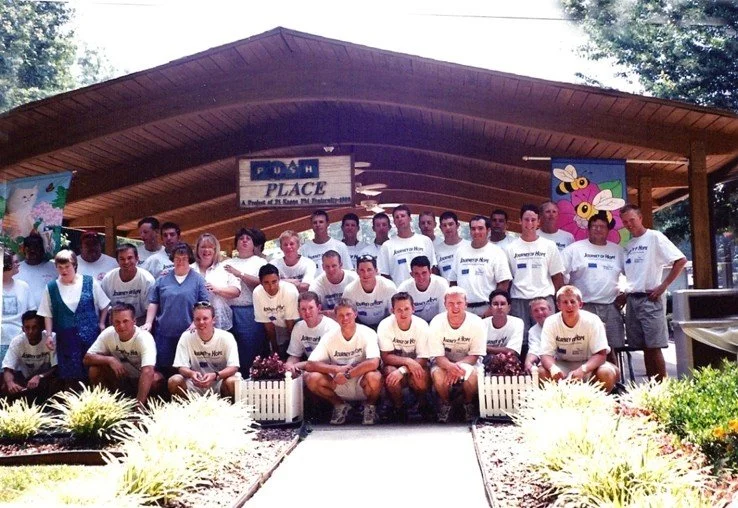
brothers of pi kappa phi and residents of holy angels celebrate the construction of push place pavilion.
Pi Kappa Phi brothers helped build structures at Camp Hope and have returned over the years to restore and expand the space. Even the camp's name reflects that connection, inspired by Journey of Hope and the spirit of hope and belonging that has brought the organizations together. Chris said spending time at Camp Hope is one of his favorite parts of each summer.
Back on the Holy Angels campus, Pi Kappa Phi brothers also built the PUSH Pavilion, which, over the years, has welcomed Journey of Hope cyclists for Friendship Visits, dance parties, a personal favorite activity for Chris, and time spent simply being together with Holy Angels residents.
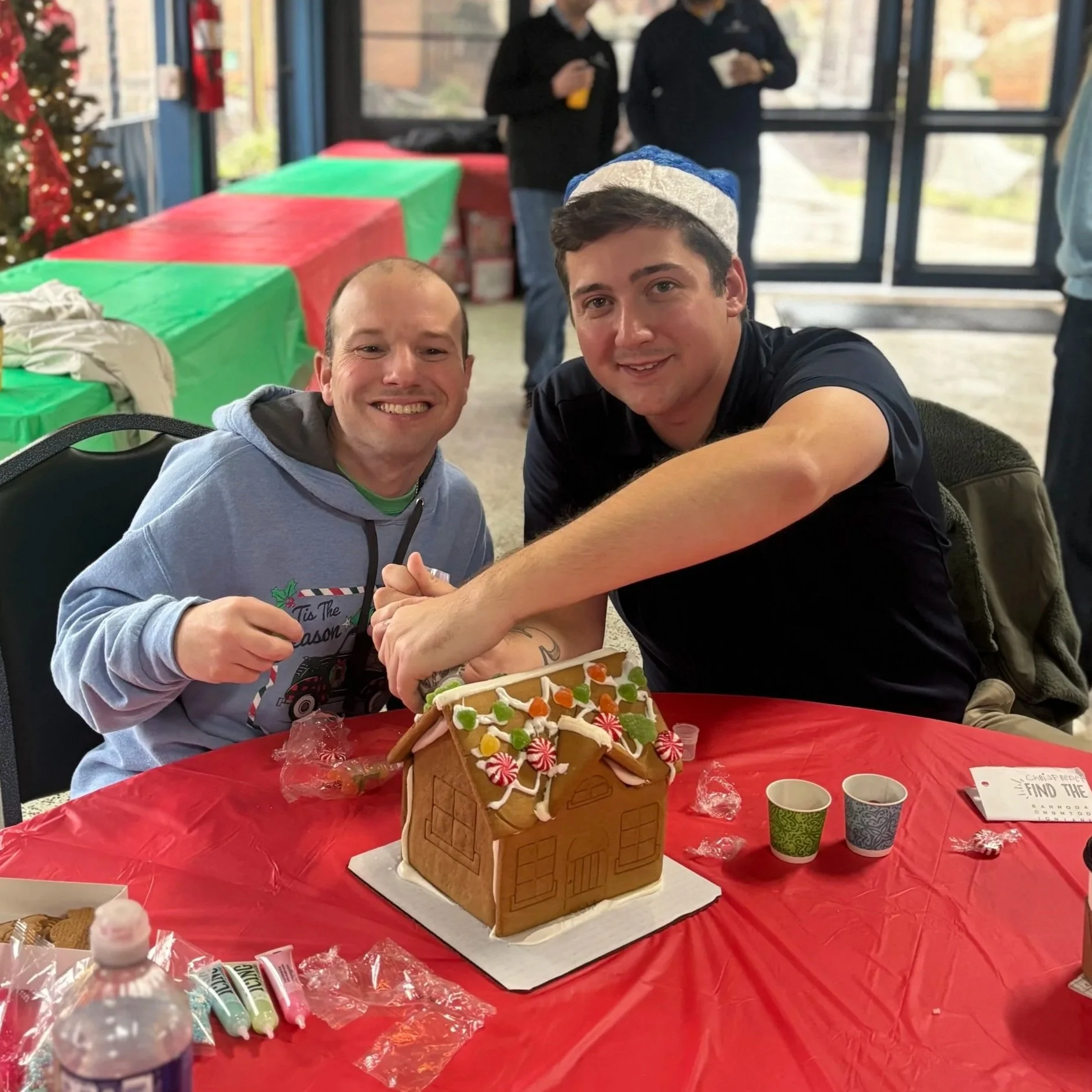
gingerbread houses and dance parties are favorite traditions at friendship visits.
That connection continues to be felt today. Residents look forward to visits from Pi Kappa Phi staff members each year. They welcome returning brothers not as strangers arriving for a project, but as familiar friends coming back to a place that matters to all of them. Those visits matter because of friendship as much as projects or programming.
And that may be what stands out most at Holy Angels. The care is real, the support is constant and the opportunities are meaningful, but underneath all of it is something even more essential: the belief that every person deserves dignity and a place to belong.
What the Sisters of Mercy offered Maria Morrow all those years ago was a place to live. What grew from that act of mercy was a place to belong.
On Saturday mornings in Belmont, that belonging looks wonderfully ordinary. It looks like Chris behind the counter at Spruced Goose Station, greeting regulars by name.
And maybe that ordinary scene is a sign of how extraordinary Holy Angels truly is. It has created a community where people with disabilities are known, needed and loved. Holy Angels has become a place for them to belong.